Dr. Merzenich has published more than 150 articles in leading peer-reviewed journals (such as Science and Nature), received numerous awards and prizes (including the Russ Prize, Ipsen Prize, Zülch Prize, Thomas Alva Edison Patent Award and Purkinje Medal), and been granted nearly 100 patents for his work. He and his work have been highlighted in hundreds of books about the brain, learning, rehabilitation, and plasticity.
That was the headline in a Washington Post article written by Ronald Glasser, published on Sunday, April 8, 2007. It reported a rather astounding statistic that applies to veterans of the Iraq and Afghanistan Wars: About 30% of soldiers in those conflicts have been directly exposed to IED or other powerful explosions. That exposure has…
Last month, I recommended a book called “Strange Son”, written by a mother who struggled to communicate with, understand, and help her own autistic child. When I was looking up the URL for the book, I scanned through the reviews posted on Amazon, and was stunned by two negative reactions. One was from a reader…
“Strange Son”, by Portia Iversen is a personal account of a very special individual (the co-founder of Cure Autism Now; a friend of mine) struggling to understand and help her autistic son. It is NOT a book about the general science of autism or about the landscape of rehabilitative therapies applied to help autistics, because…
I was just training in BrainHQ this morning. Because I have been working on the development of these exercises over the past several years, I’ve spent many an hour hunched over my computer “trying to get the answer right” on model training programs!! My current goal is to make brain fitness training part of my regular…
I attended a scientific meeting a few years ago in which Bill Jenkins, the program development team leader at Scientific Learning, described a radically improved version of one of their middle- and high school-targeted language learning programs (which they call “Literacy Advanced”). They have completely re-worked the game-play aspects of these exercises. Changes resulted in…
Serum BDNF (brain-derived neurotrophin factor) has been repeatedly shown to be lower than normal in schizophrenic, bipolar and depressed patient populations. Moreover, the severity of manias or depression have been shown to be inversely correlated with serum BDNF. This key brain trophic factor plays a complicated panoply of roles in brain development, in maintaining the…
A study in an issue of the Archives of Pediatrics and Adolescent Medicine focussed on autism spectrum disorders. A paper in that issue authored by a public health economist, Dr. Michael Ganz, used a rich variety of sources to determine the societal costs of autism. In today’s dollars: $3.2 million/autistic individual/lifetime. $35 BILLION overall, in…
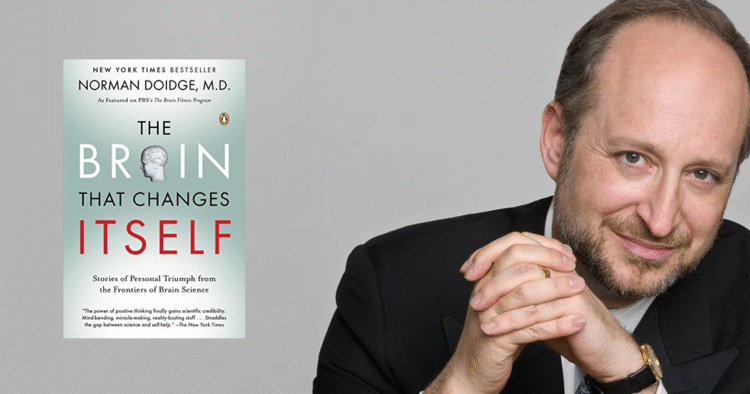
The Brain That Changes Itself (2007) by Normal Doidge, M.D. This interesting book chronicles some of the stories of the men and women who have ushered in the new “brain plasticity” revolution in neuroscience. As we repeatedly emphasize in this blog, the brain is no longer viewed by neuroscientists as a machine that is hard-wired…
In another entry related to the neuroscience of aging, I cited a study by Heflin et al on the significantly negative mental consequences of surviving cancer and its treatments. This “twins study” was one of a series of such experiments that have come from the University of Southern California research team of Margaret Gatz. Her…